Welcome to solving equations with circular functions
This stage builds on your understanding of the definitions of circular functions and explores their consequences for equations involving them.
Use the unit circle diagram to help you visualize solutions!
 Dr Brian Brooks
Mathematics InSight
Solving equations with circular functions
We'll start by going back to something very familiar from right-angled triangles and then see how to extend this to solving equations with our new more general circular functions.
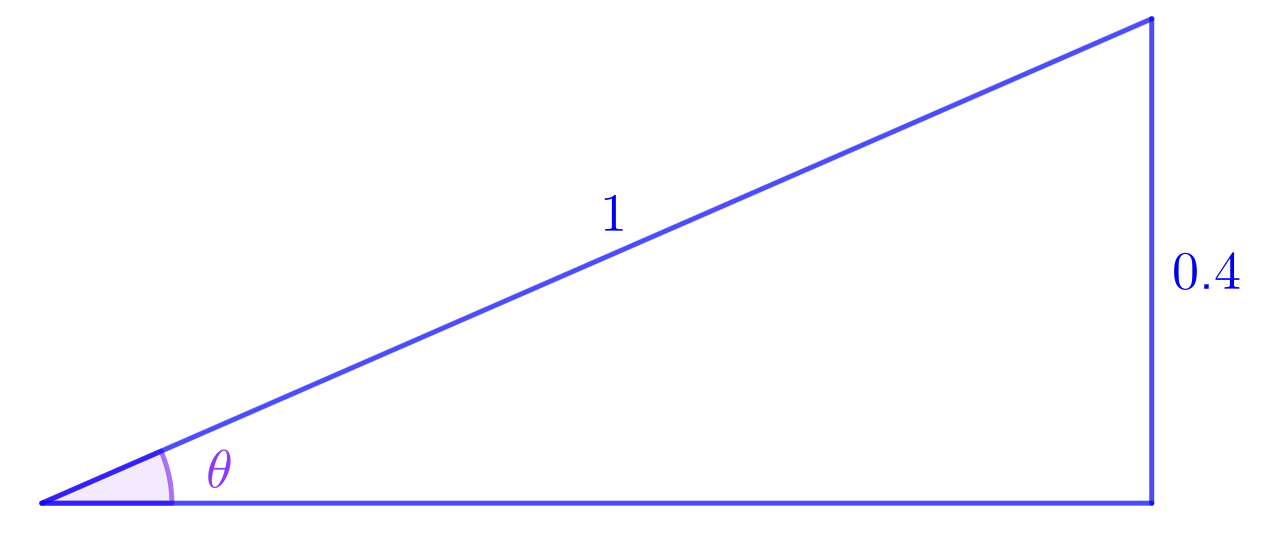
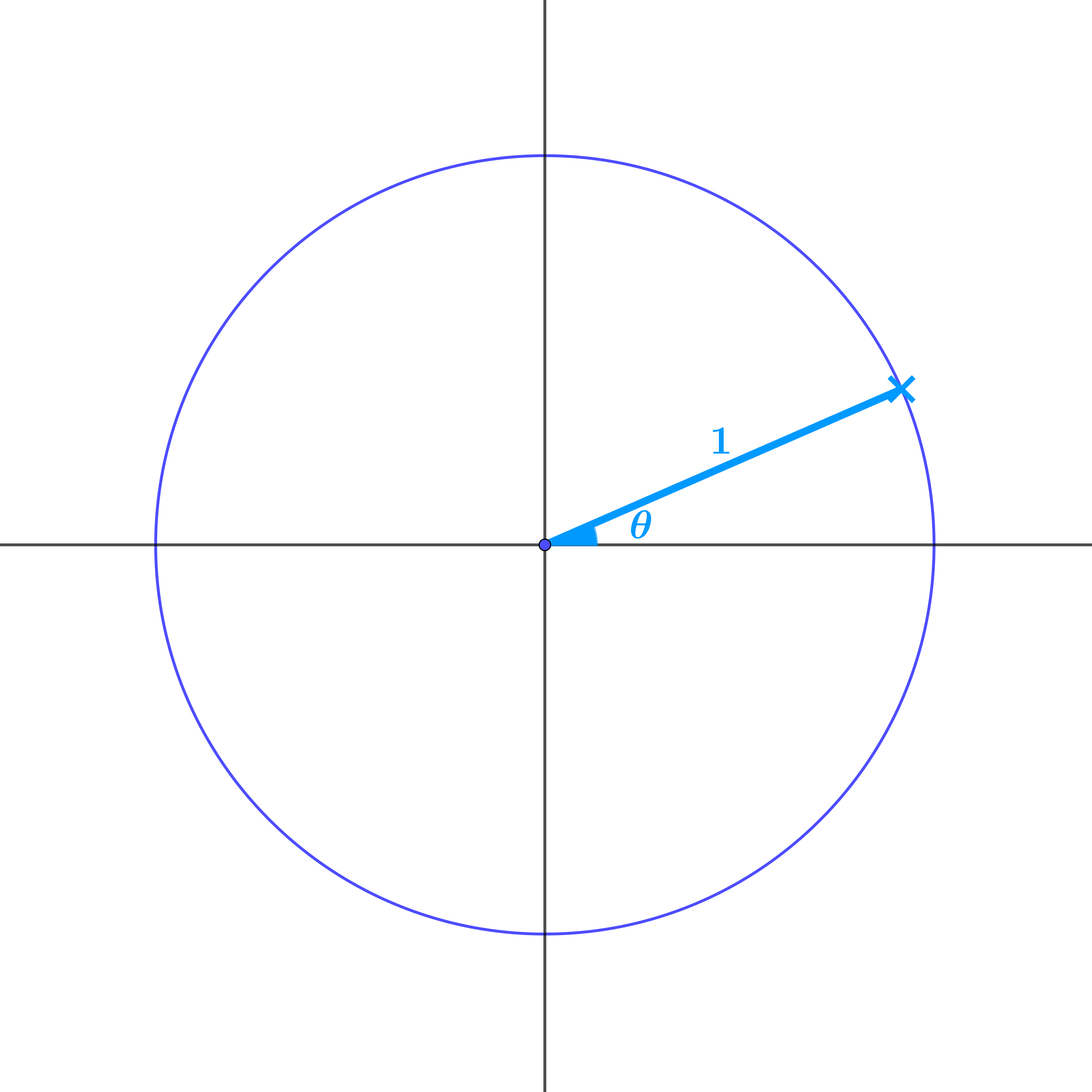
\(\theta = \sin^{-1}0.4 = 23.58°\), so \(23.58^\circ\) is a solution to the equation \(\sin\theta=0.4\).
There are an infinite number of solutions to an equation like \(\sin\theta = 0.4\), and this is only the smallest positive solution. This page is all about finding those other solutions.
Finding them is a question of symmetry, and you can either use this unit circle to do your visualisation or you can use graphs. I am a great believer in the advantages of the unit circle over graphs, and that is the approach I take here.
If you have always used graphs to find solutions to equations like this, I strongly recommend that you give this way a go. It has many advantages: for example, the unit circle is easy to sketch when solving a problem, and easy to visualise without sketching. It's easy to remember that the coordinates of a point are \((\cos\theta, \sin\theta)\) and that the gradient of the radius is \(\tan\theta\). On the other hand, for graphs, you have to remember quite a bit of detail about three different graphs, and then it's much harder to use symmetry to read off the solutions.
You might find it takes some getting used to, but I don't think you will ever look back!
Now we know one solution to the equation \(\sin\theta=0.4\). Next, we'll see how to find other solutions to the same equation.
The \(y\) coordinate of the blue point is \(0.4\). Find another point on the circle with the same \(y\) coordinate as the blue point. Use this new point to find another solution to the equation \(\sin\theta=0.4\).
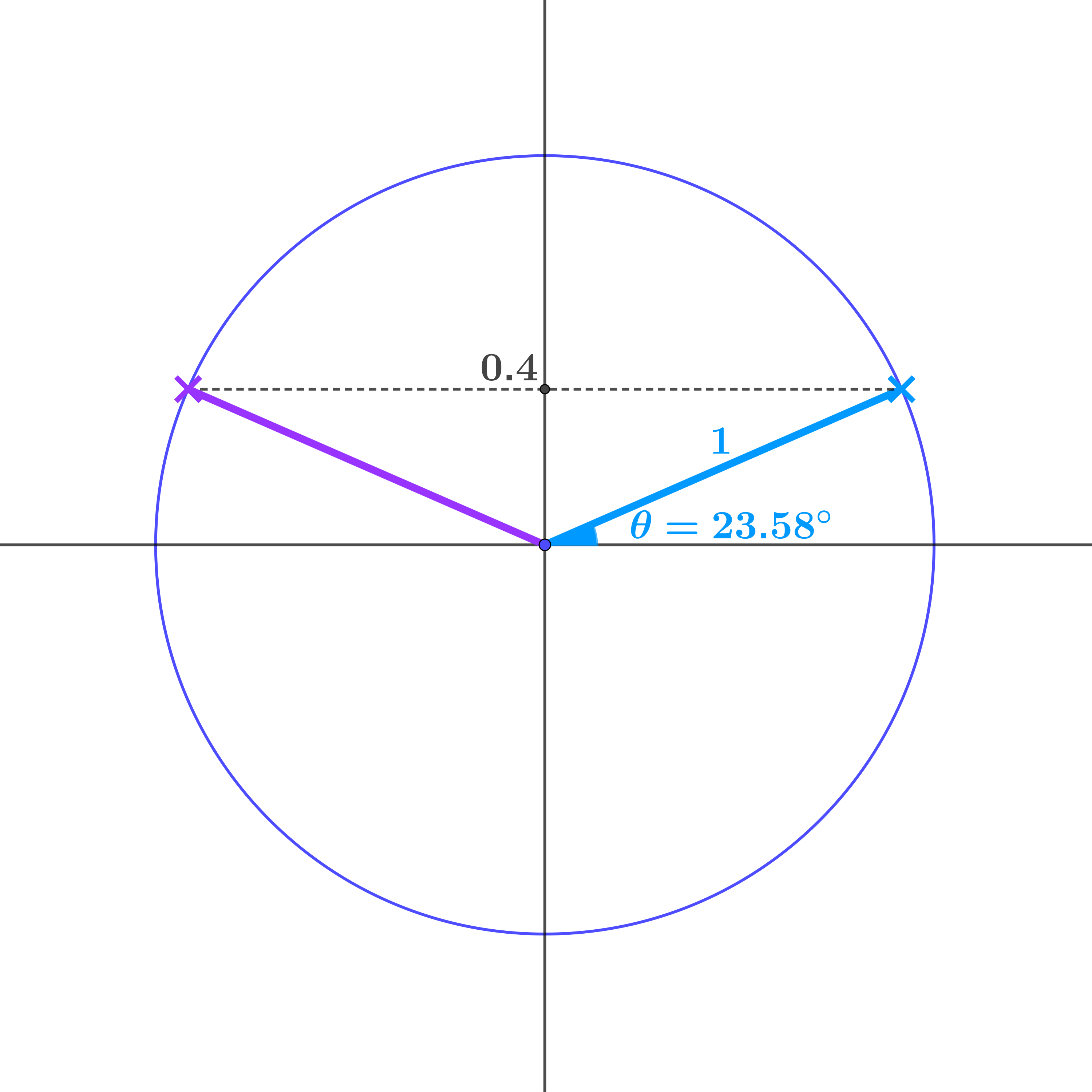
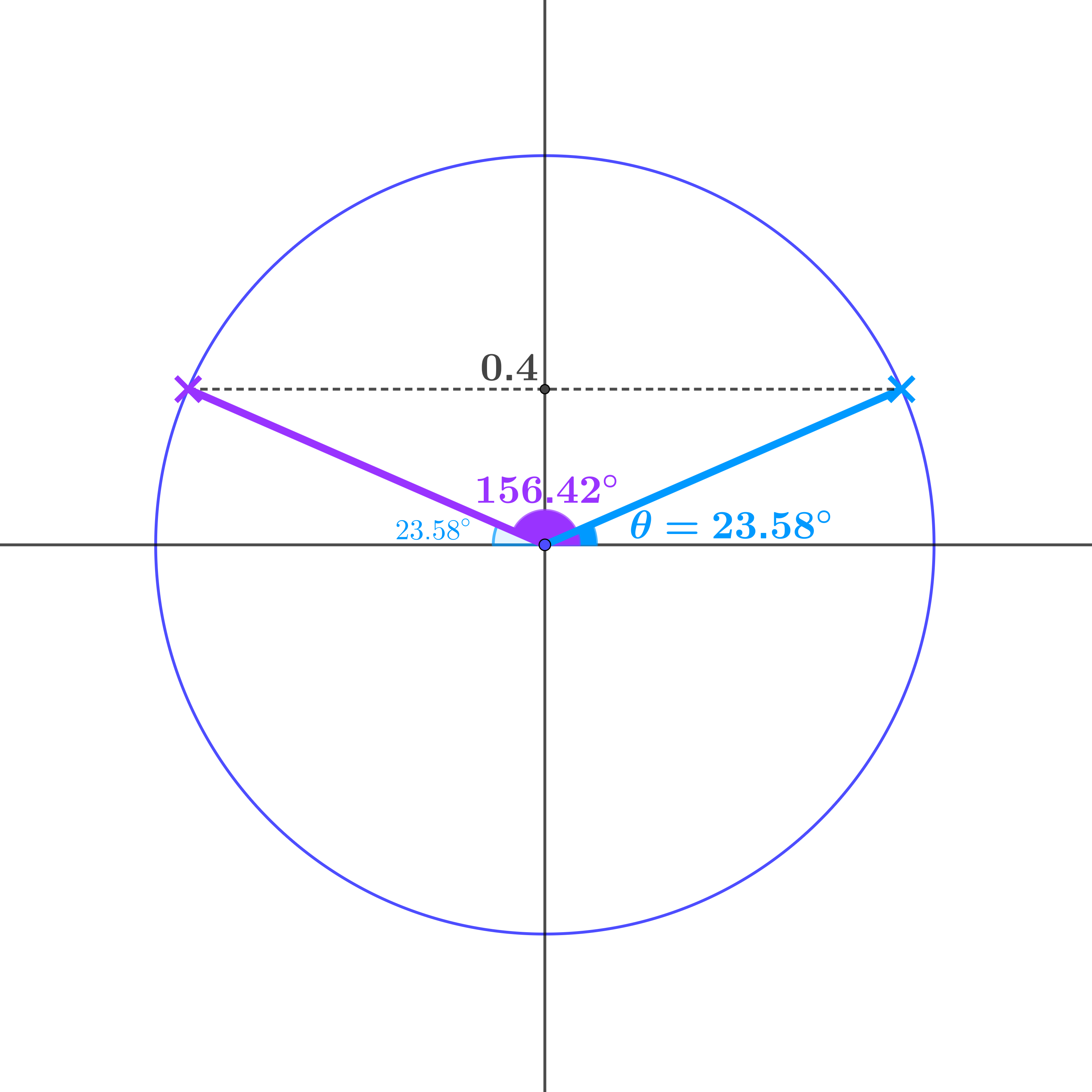
Symmetry is the key (as it is with graphs), so
\(180 - 23.58 = 156.42°\) is another solution of \(\sin\theta = 0.4\)
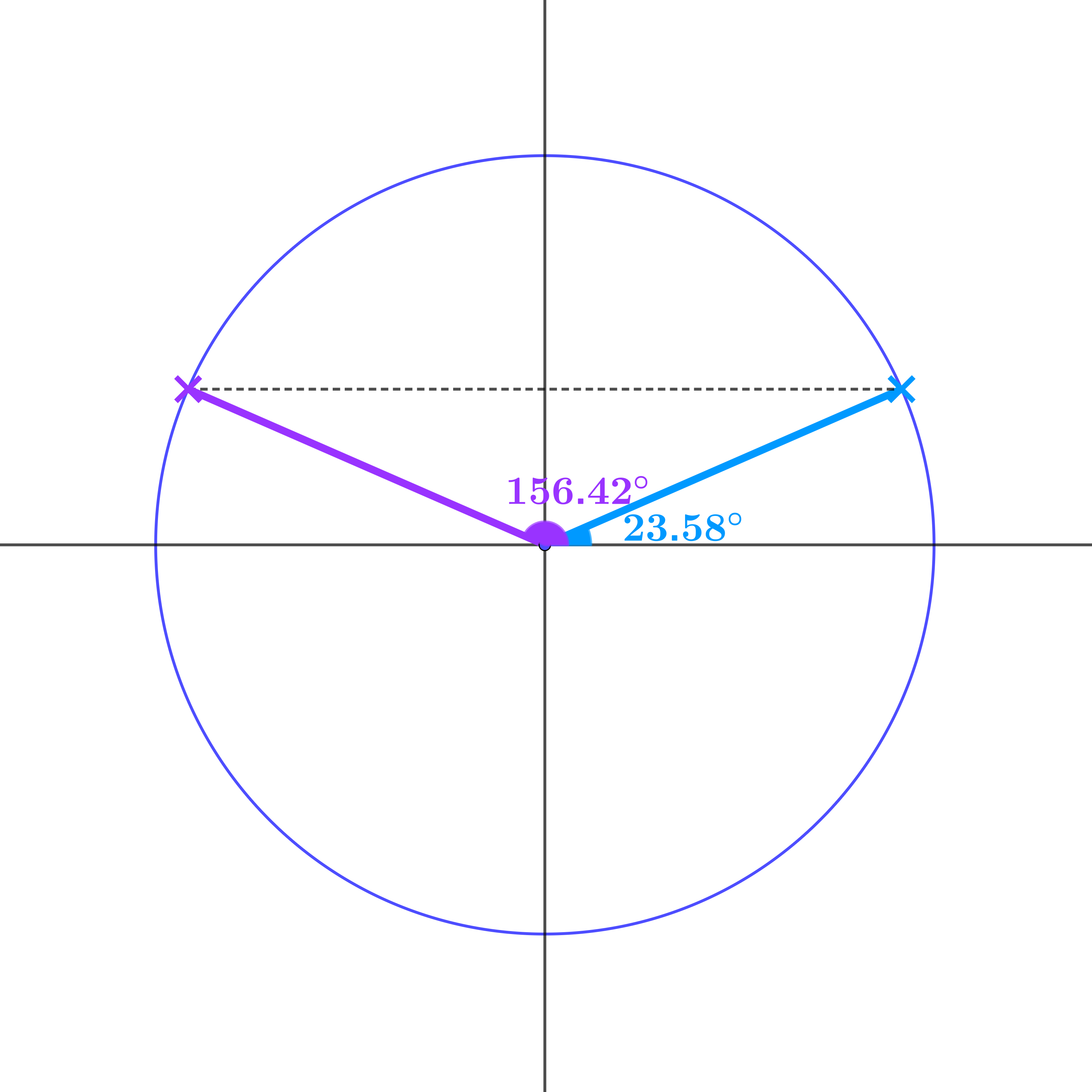
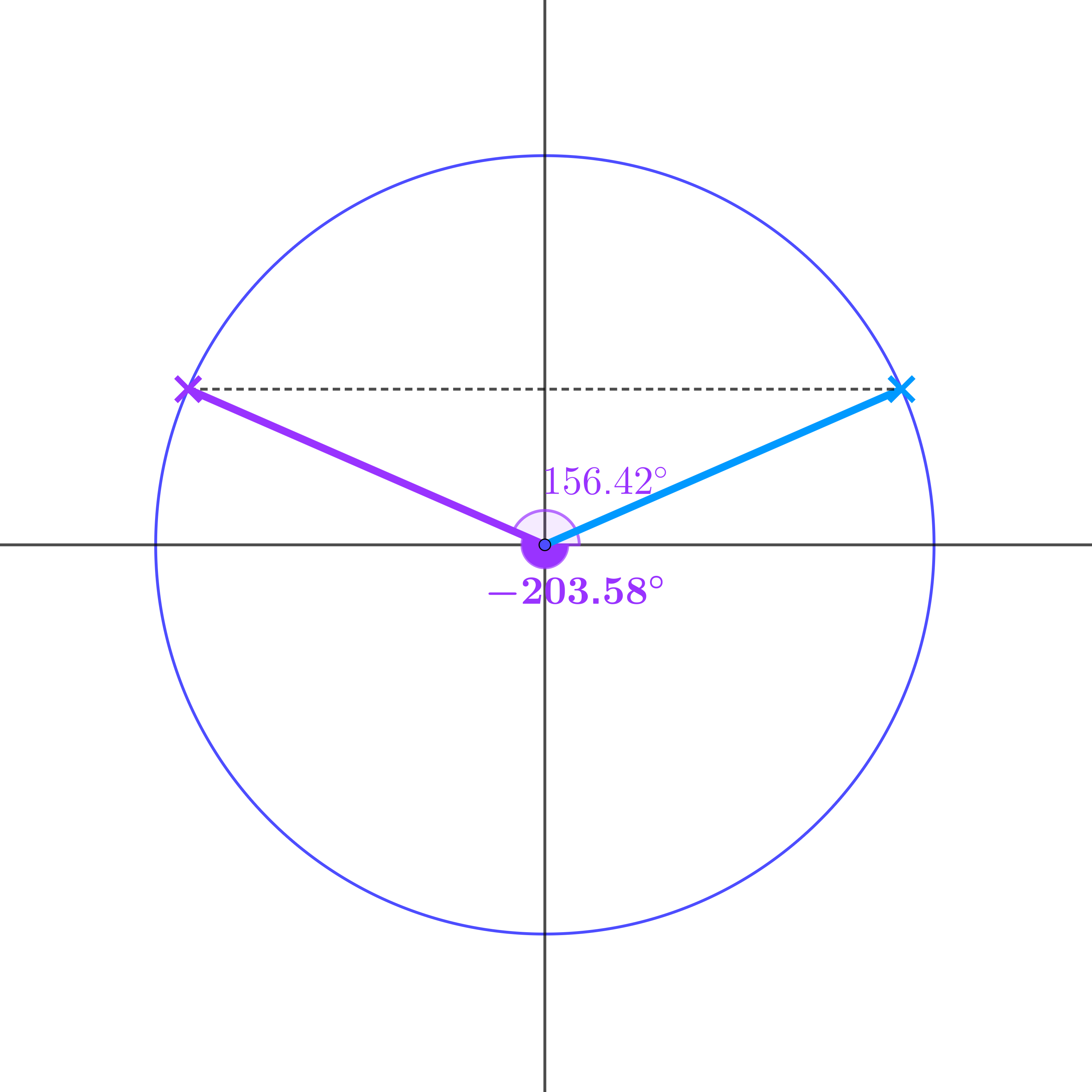
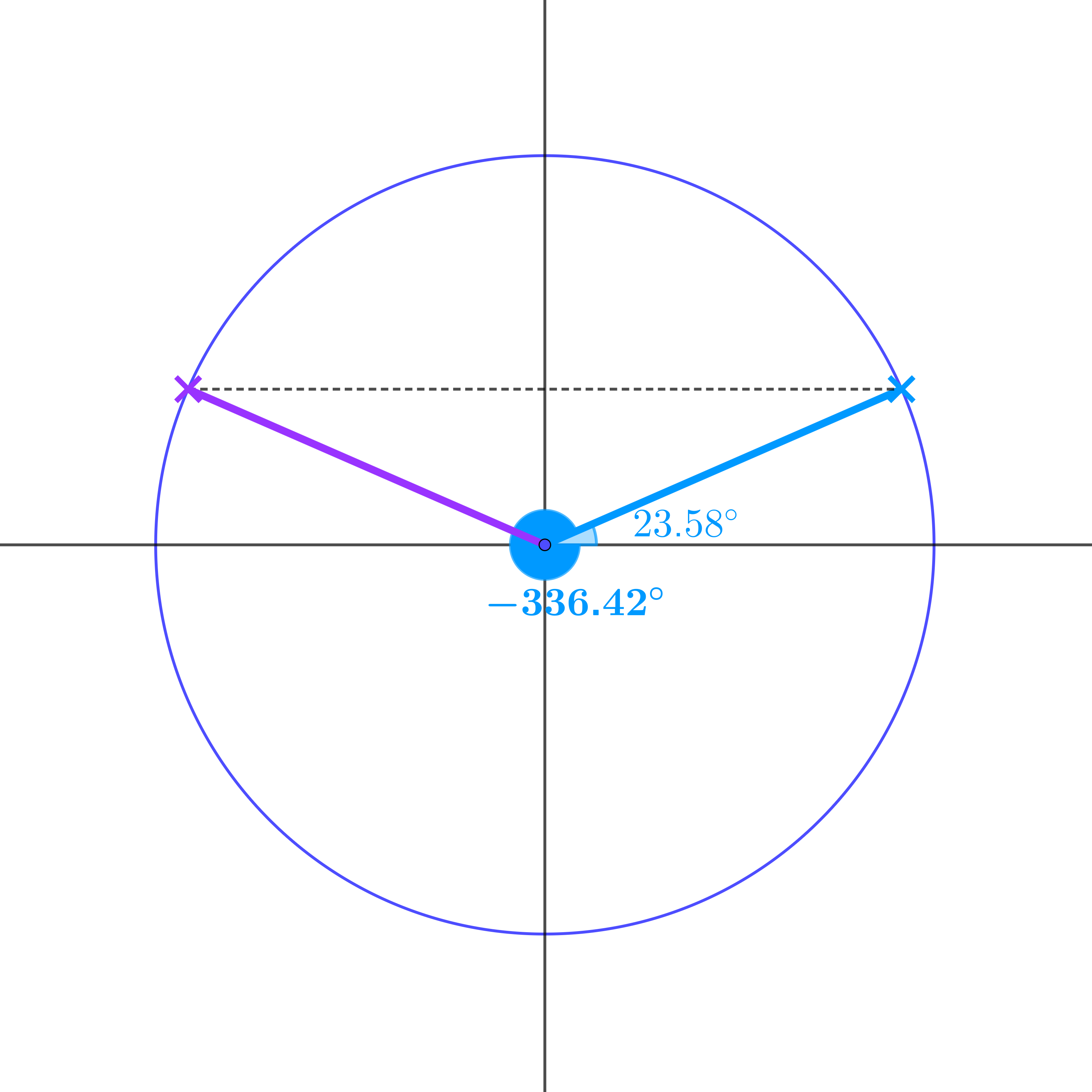
\(-203.58°\) and \(-336.42°\) are also solutions of \(\sin\theta = 0.4\).
\[\theta = 23.58°, 156.42°, 383.58°, 516.42° \ldots\]
\[-203.58°, -336.42°, -563.58°, -696.42° \ldots\]
The dots ... mean "keep adding or subtracting \(360°\) as often as you like."
Play around with the various solutions we have already found, and you will soon see that only the following produce other solutions:
| \(180 - \alpha\) | \(\alpha + 360\) | \(\alpha - 360\) |
The point of asking this question is to get to some easy rules for solving sin, cos, and tan equations that don't even need the unit circle, let alone graphs.
Here is an easy rule to remember:
• for equations with sin, take your first answer from \(180\).
• then keep adding or subtracting \(360°\) as often as you like to each of your solutions.
Next, we will adapt the previous method to solve the equation \(\cos\theta = -0.7\).
First, find another point on the circle with the same \(x\) coordinate as the blue point.
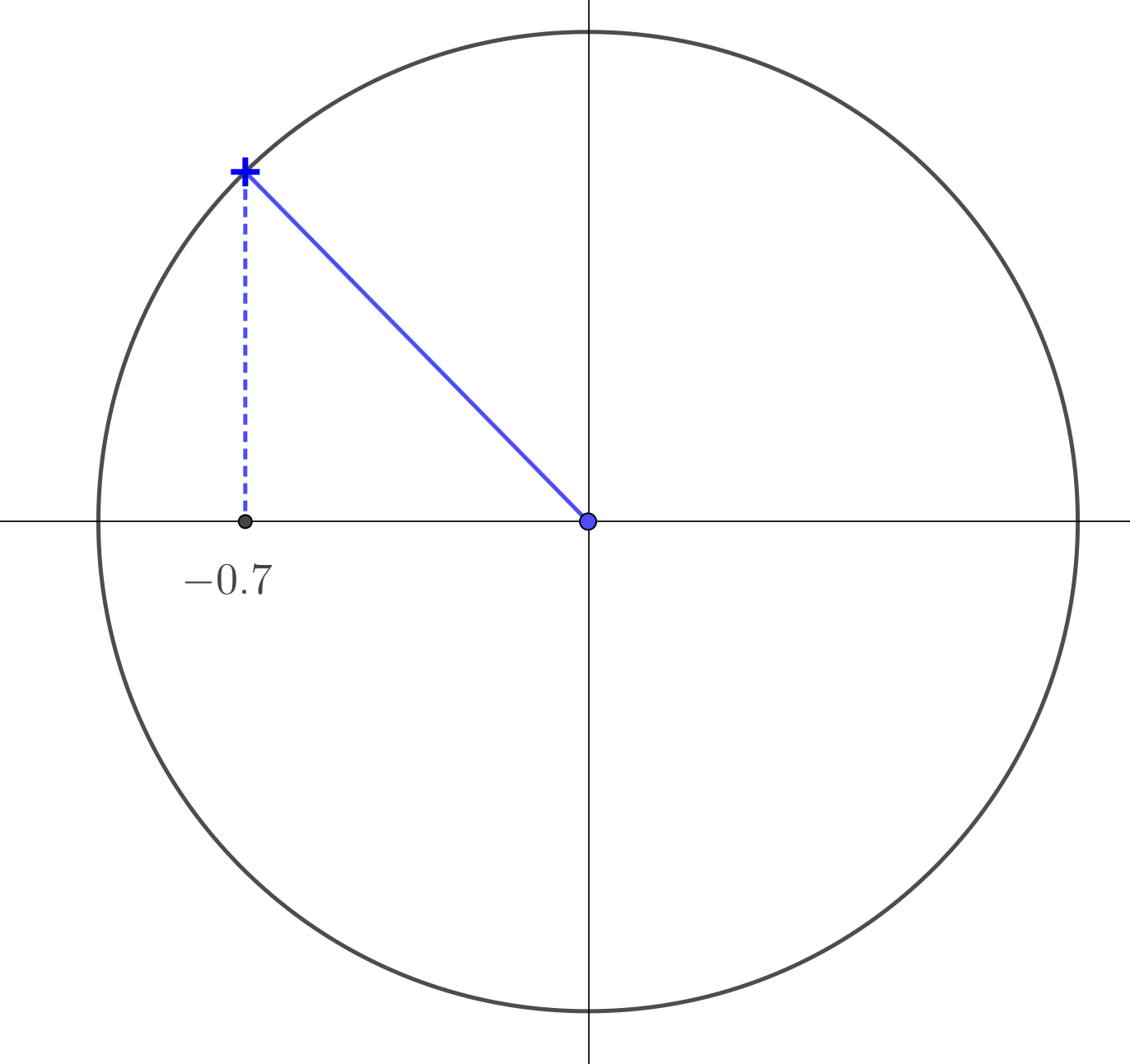
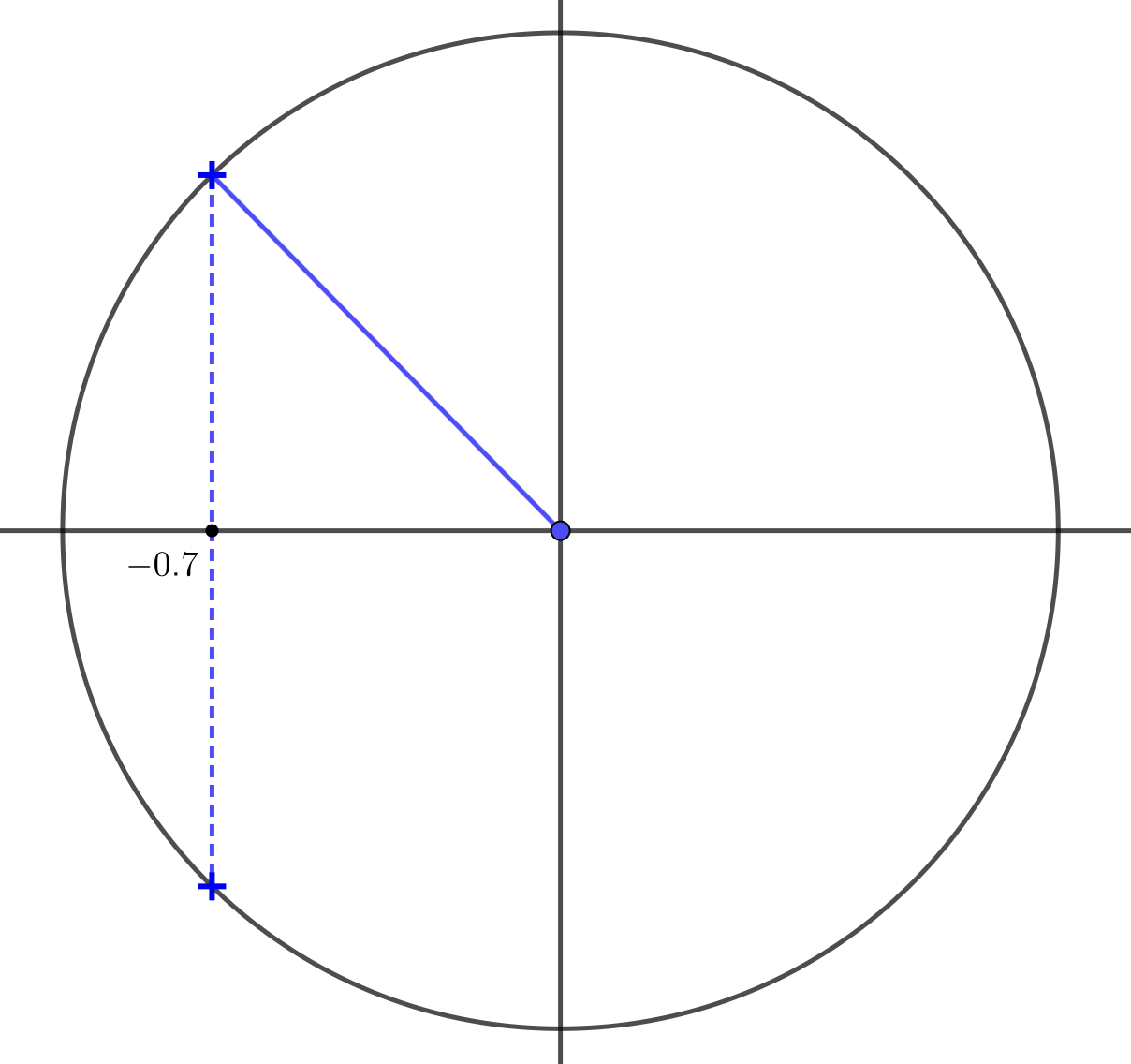
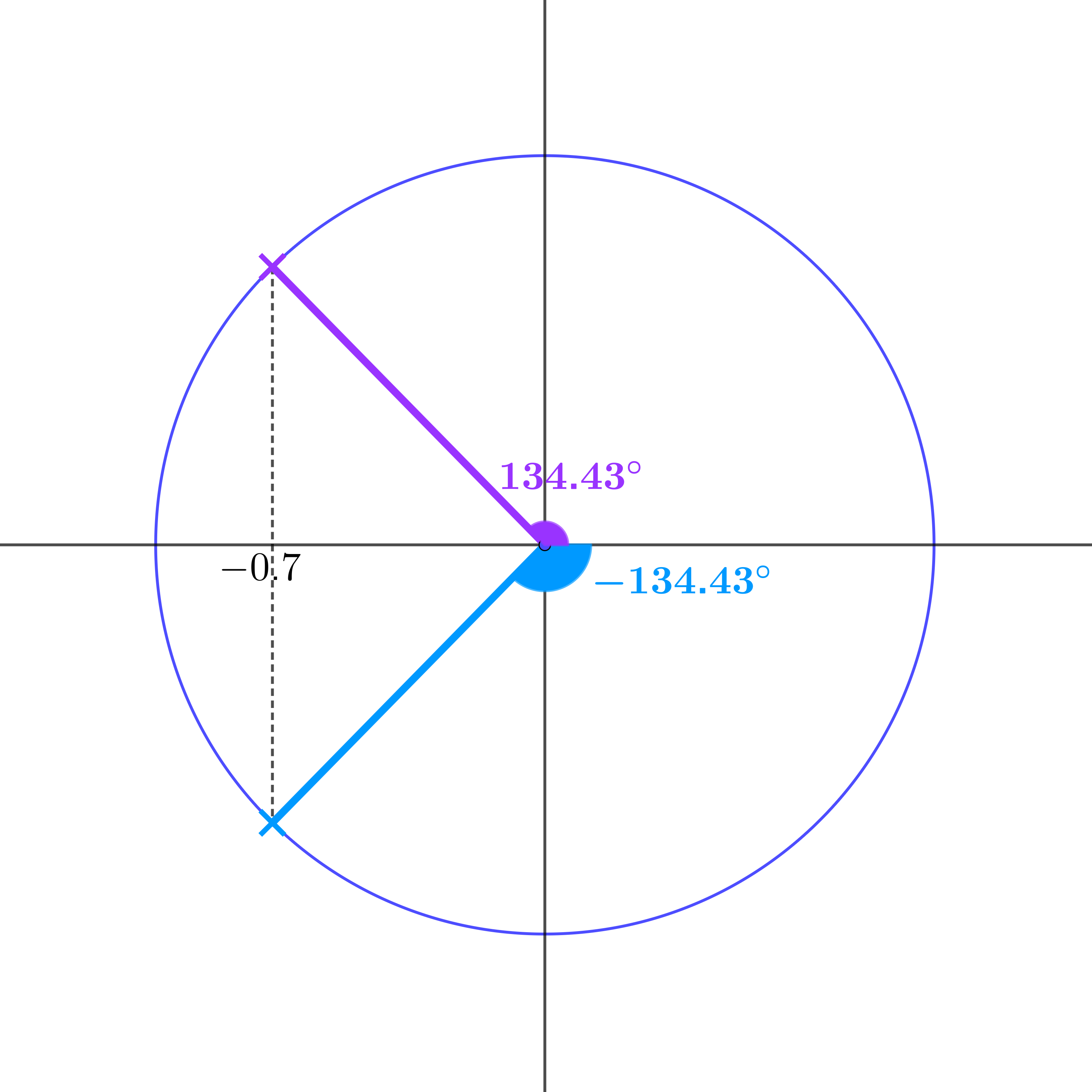
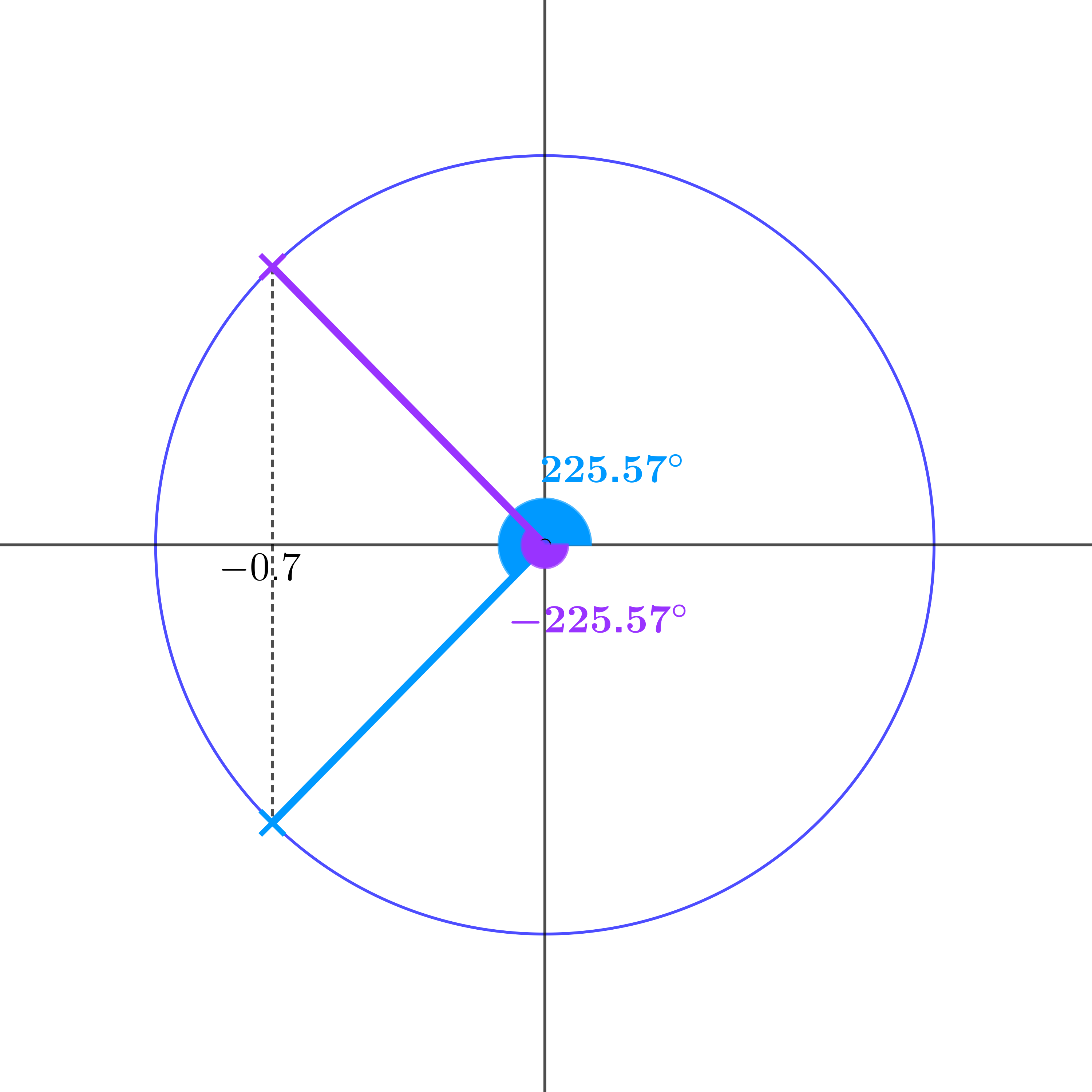
\[\theta = 134.43°, 225.57°, 494.43°, 585.57° \ldots\]
\[-134.43°, -225.57°, -494.43°, -585.57° \ldots\]
Play around with the various solutions we have already found, and you will soon see that only the following produce other solutions:
| \(-\alpha\) | \(\alpha + 360\) | \(\alpha - 360\) |
This is the second easy rule to remember:
• for cos, take the negative of your first answer.
• then keep adding or subtracting \(360°\) as often as you like to each of your solutions.
In this diagram, what is \(\tan\theta\;\)?
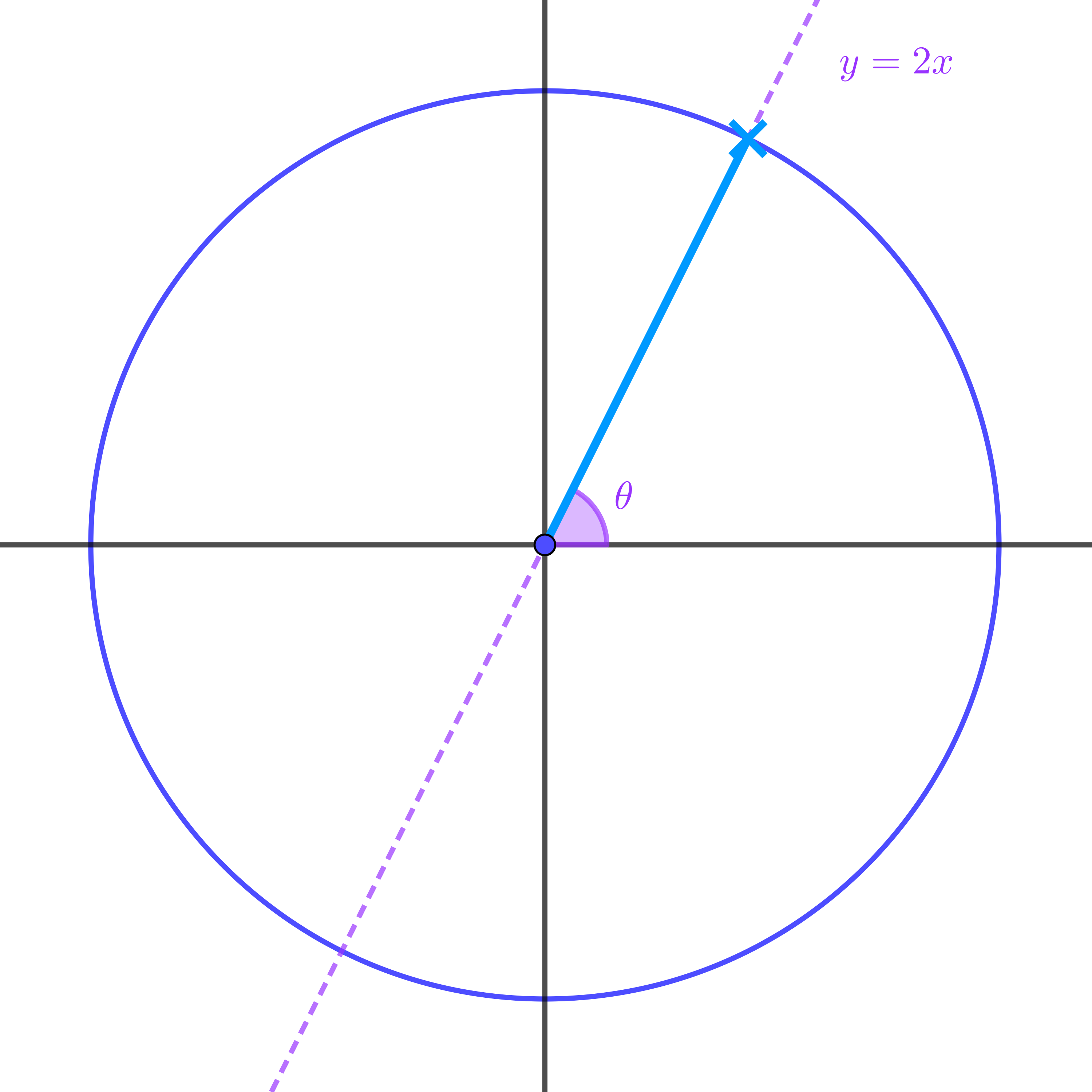
tan is the gradient of the radius, so \(\tan\theta=2\).
Where is another point on the circle whose radius has the same gradient?
Where is another point on the circle whose radius has the same gradient?
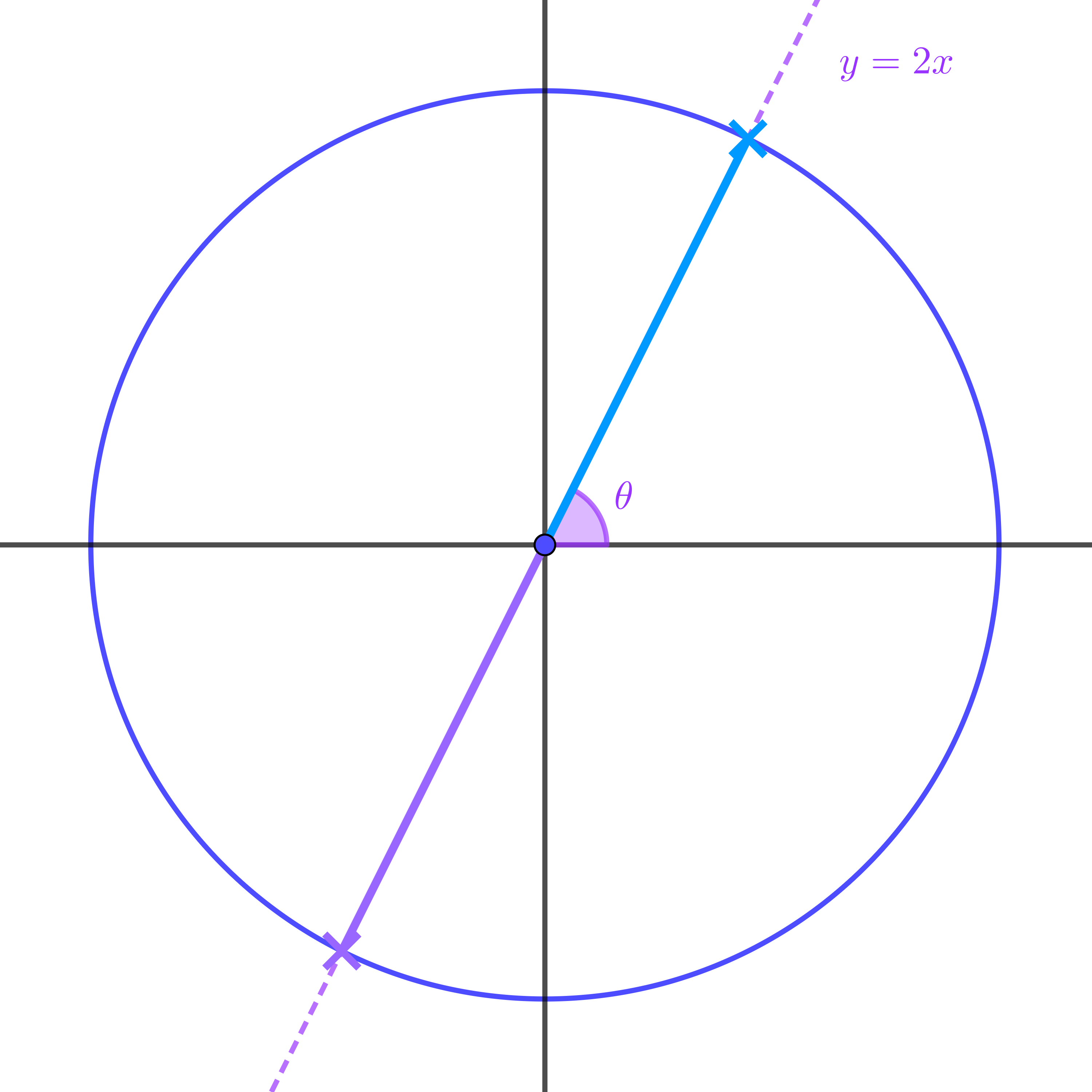
Solve the equation
\(\tan\theta = 2\)
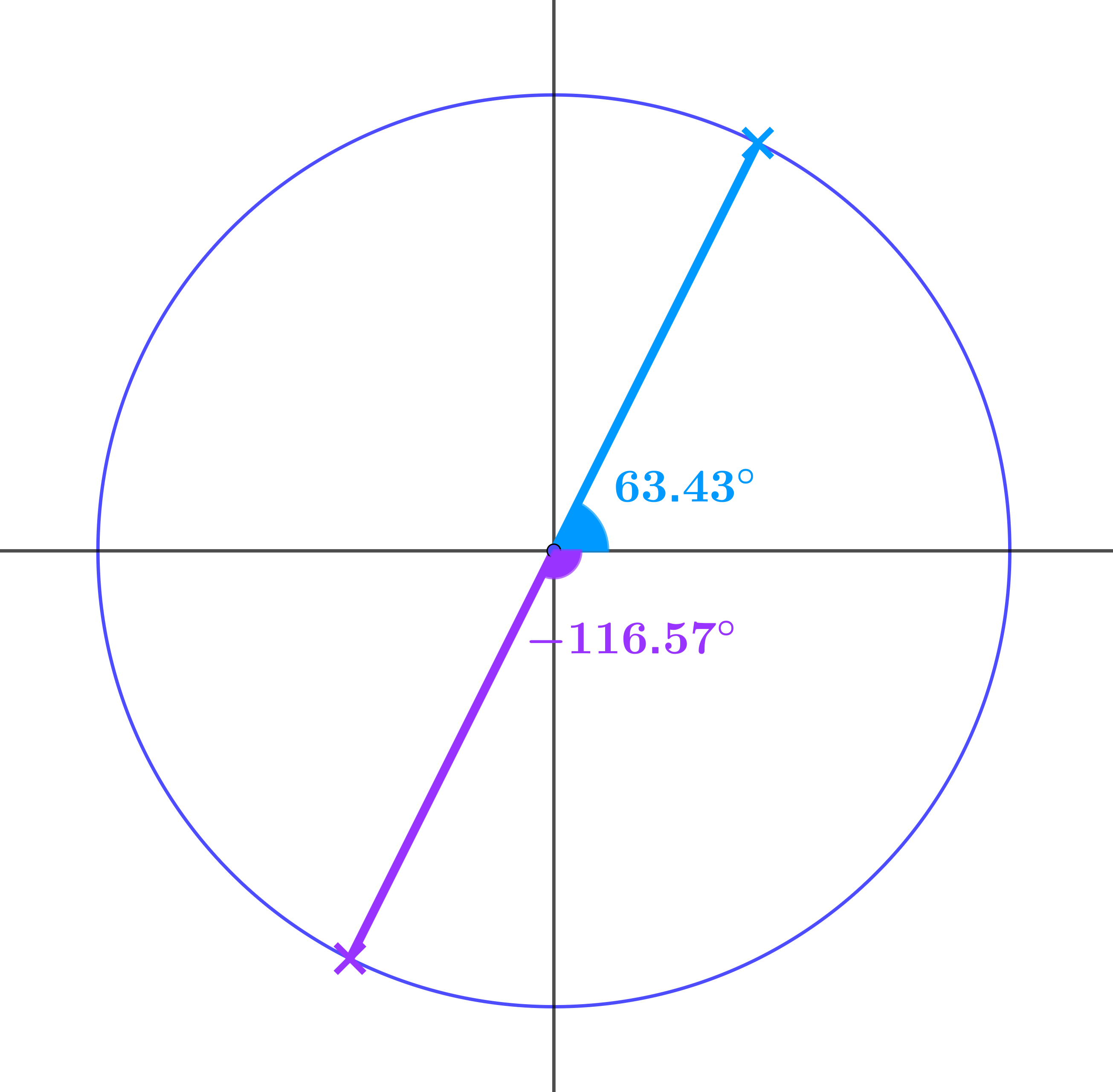
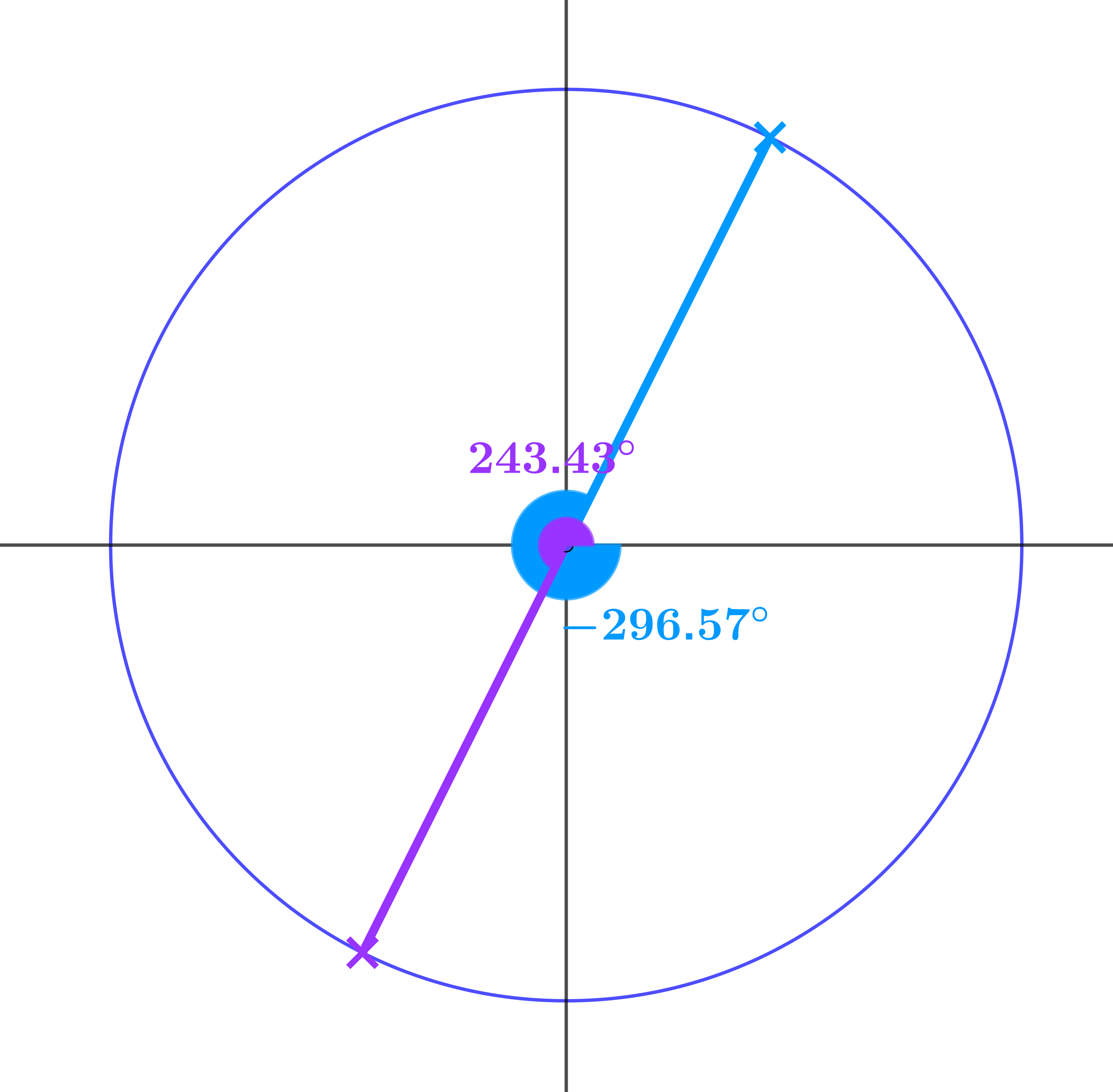
\[\theta = 63.43°, 243.43°, 423.43°, 603.43° \ldots\]
\[-116.57°, -296.57°, -476.57°, -656.57° \ldots\]
Play around with the various solutions we have already found, and you will soon see that only the following produce other solutions:
| \(180 + \alpha\) | \(\alpha + 360\) | \(\alpha - 360\) |
Here is the third easy rule to remember:
• for tan, add \(180\) to your first answer.
• then keep adding or subtracting \(360°\) as often as you like to each of your solutions.
Congratulations on completing this stage!
Now you can see the unit circle is the key to solving equations involving circular functions, and how intuitive the relationship is between the unit circle and the equations.
Dr Brian Brooks
Mathematics InSight